Trans Oral History Project Featured in Omnia

By Ev Crunden
Paper, staples, and some creativity. That’s often all you need for zines—small, self-published booklets typically produced in limited batches through a do-it-yourself approach. They’re a time-honored, popular tool for sharing information creatively, even on a low budget, says Marc Ridgell, a rising fourth-year PhD candidate in the Africana Studies Department whose research focuses on Black LGBTQ+ life in Philadelphia.
“Zines have historically been a modal form that gave marginalized communities the capacity to express themselves, as well as spread critical information and organizing strategies,” Ridgell explains.
They’ve also become a central focus for the Philadelphia Trans Oral History Project, or PTOHP. Over the past few years, dedicated PTOHP staff and volunteers—including many Penn Arts & Sciences students and alums—have painstakingly recorded interviews with transgender Philadelphians, highlighting everything from childhood memories to recollections of the city’s past nightlife. Soon, some of those memories will be publicly accessible, thanks to a series of zines publishing this summer and some help from the Free Library of Philadelphia.
Sharing Local History
PTOHP began in 2019 as an effort to preserve and make available stories from trans and gender-nonconforming Philadelphians. A grant received by the Center for Research in Feminist, Queer, and Transgender Studies kicked off the project, which has grown with partners including the William Way LGBT Center; the Price Lab for Digital Humanities; the Department of Sociology; the Annenberg School for Communication; and the Penn Libraries’ Research Data & Digital Scholarship team. Their support paved the way for a rich series of interviews, all recorded and transcribed by volunteers.
Growing that number is on hold for the time being due to funding issues. In the interim, the project’s backers turned to zines as a way to highlight the stories and history powering the larger project. Those small pamphlets incorporate some quotes from the existing interviews and archival images from the William Way John J. Wilcox Archives, along with information garnered from events, intracommunity dialogue, and community partnerships.
Most importantly, according to Nat DiFrank, PTOHP’s project manager, they raise awareness around PTOHP and give community members something physical to interact with—“creating special mementos that trans Philadelphians can keep in their homes and personal archives,” says DiFrank, who uses he/they pronouns. Translating PTOHP’s work into zines, Ridgell adds, is a way “to tell a history of local trans life” at a time when the community faces major obstacles and discrimination.
A Vision Brought to Life
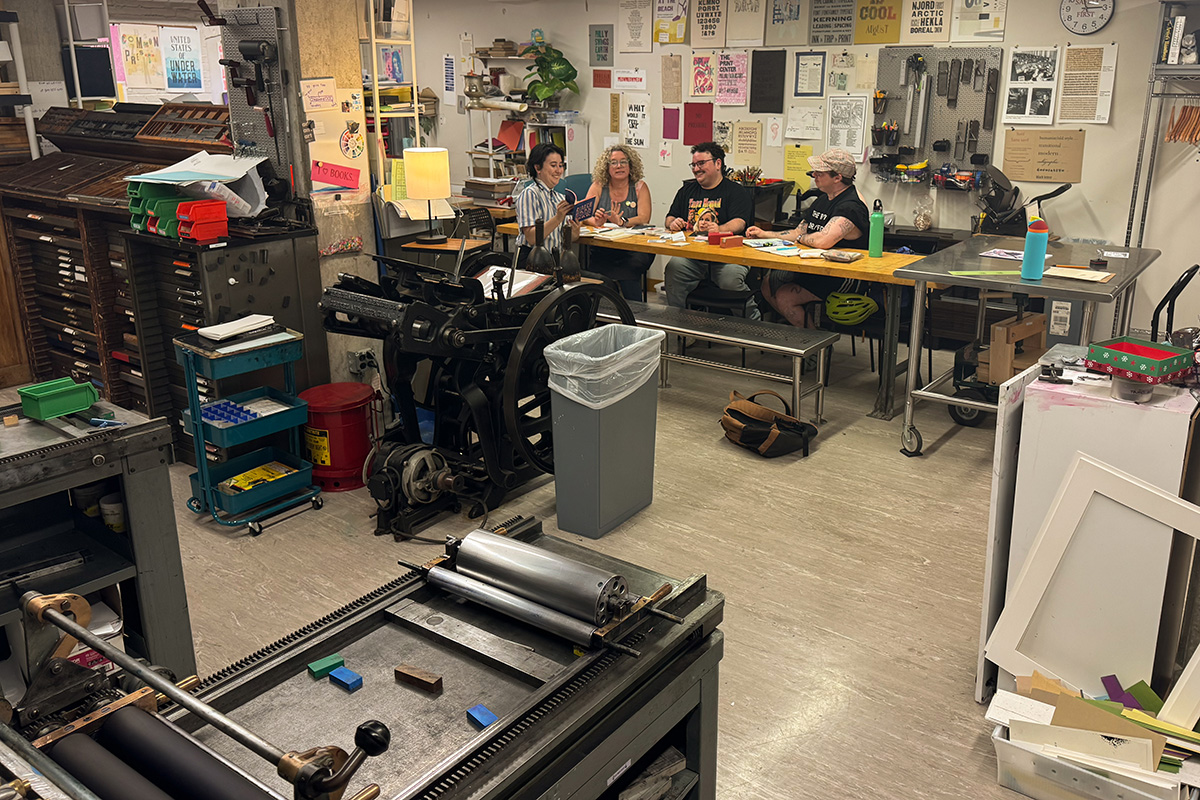
A small grant from Annenberg helped secure resources to make the zines a reality, bolstered by work with Common Press and the Philadelphia library system, the latter of which agreed to host the archives and ensure they are publicly available. At least three zines will wrap up in July, all pegged to time periods: 1965 to 1985; 1986 to 2006; and 2007 to present.
DiFrank says beginning in 1965 is very intentional: Four years before the now-famous riot at the Stonewall Inn, Philadelphia had one of the earliest known sit-ins against LGBTQ discrimination at Dewey’s Lunch Counter in Rittenhouse Square. According to DiFrank, it was one of the first recorded protests in the country where a gay rights organization—the Janus Society—partnered with and explicitly defended the right to public life of gender non-conforming people. The other timeline blocks similarly highlight historical periods and keep the zines themselves from growing too hard to staple.
“Years down the line, these materials will be archival proof of resilience and community. These zines, and this project, show us what it looks like to reclaim our stories and to situate ourselves within a broader historical and geographic context.”
Pulling together the small keepsakes has been a labor of love for Nicole V. Hoang, C’26, who spent three months gathering photographs from free-use online archives for the zines, along with many other tasks. Hoang, who majored in gender studies with a concentration in civil rights, says she came into the project with interviewing and transcription experience, but PTOHP also requires leaning on interpersonal ties.
“Years down the line, these materials will be archival proof of resilience and community,” she says. “These zines, and this project, show us what it looks like to reclaim our stories and to situate ourselves within a broader historical and geographic context.”
Ridgell, who began volunteering during the first year of their PhD, eventually wound up assisting with the zines, editing and applying historical context with an emphasis on local history since the advent of AIDS. Though they have since shifted to focus on their dissertation—an ethnographic study of Black LGBTQ+ social and institutional life in contemporary Philadelphia—they say their time working on the project and zines has prepared them for fieldwork, as well as a future career in academia.
Looking Back, Looking Forward
As with its volunteers past and present, PTOHP’s future is also evolving. The Free Library is set to host events like zine folding and a launch celebration, and there are other zines in the works on topics that exemplify Philadelphia’s “unique and rich trans history,” per DiFrank. Those include the creation of the Trans Wellness Conference, the largest trans-focused conference in the world, and Morris Home, the only recovery center in the nation that exclusively supports trans and non-binary individuals.
Some more abstract spaces could also garner recognition. “One example of is from our interview with [Philadelphia ballroom performer] Keon Winston, who described how he would gather with other trans men in parking lots before entering nightclubs to help adjust each other’s ace bandages,” says DiFrank. “These spaces of intracommunity intimacy, although seemingly insignificant, are sites of trans resistance that have kept our community alive.”
Ultimately, preserving and highlighting such local trans histories has always been the goal of the project more broadly. And with the zines publishing this summer—along with those to come—that’s well underway.